

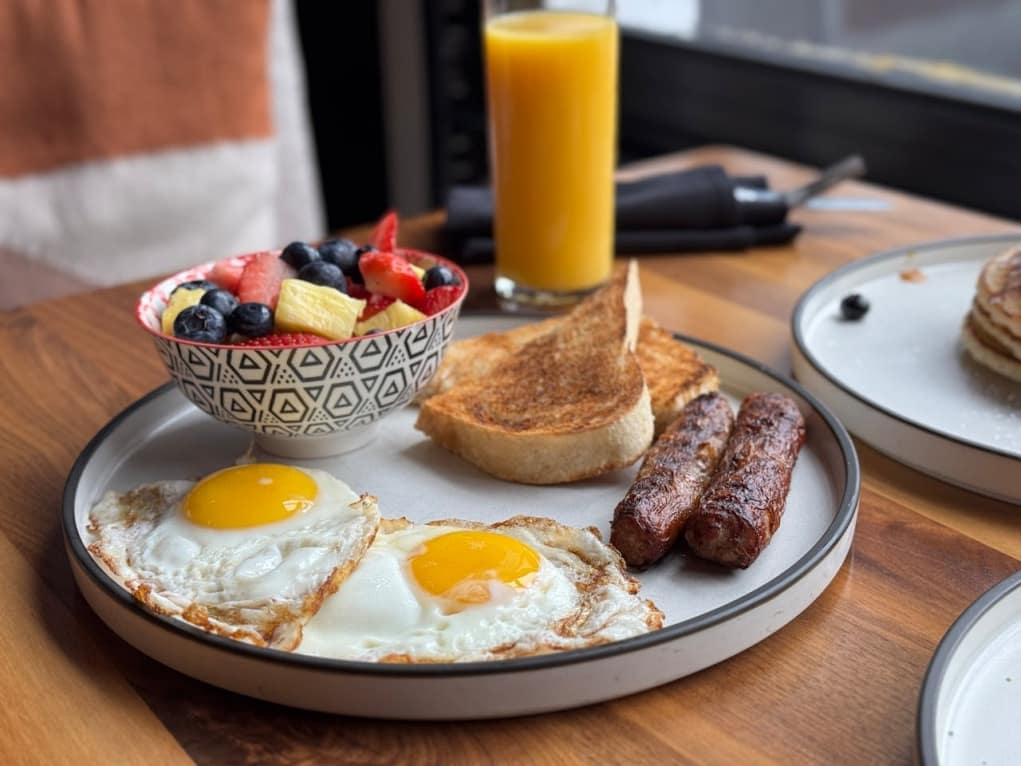
If your mornings start strong but your energy crashes mid-morning, breakfast may be part of the reason. A lot of common breakfasts are built mostly on quick carbs—cereal, pastries, sweet coffee drinks, or toast by itself. They taste great, but they often digest fast and leave you hungry again within a couple of hours.
Protein helps solve that. A protein-focused breakfast can keep you full longer, support muscle recovery, and help stabilize energy so you’re not reaching for extra snacks or caffeine just to feel normal.
This guide gives you 10 practical, easy high-protein breakfast options, plus a simple way to build your own without overthinking it.
Why Protein at Breakfast Helps Energy
Protein supports energy in a few practical ways:
- It increases satiety (you feel full longer)
- It can help stabilize appetite and reduce cravings
- It supports muscle maintenance and repair, especially if you train
- It helps slow digestion when paired with fiber, reducing “spike and crash” patterns
You don’t need to chase a perfect gram target. But many people feel noticeably better when breakfast includes a meaningful protein source instead of only carbs.
A Simple Protein Target for Breakfast
A helpful range for many adults is 20–35 grams of protein at breakfast. Some people do fine with less, but if you’re hungry quickly or you’re trying to build a routine for fat loss or strength, this range tends to work well.
If you’re new to high-protein eating, start with what feels realistic. Even moving from 5–10 grams to 20 grams is a big upgrade.
10 Easy High-Protein Breakfast Options
These options are designed to be simple. Choose the ones that match your schedule and preferences.
1) Greek Yogurt Bowl
- 1 cup Greek yogurt
- berries + a small handful of granola or oats
Optional: chia seeds for fiber
2) Eggs + Toast + Fruit
- 2–3 eggs (scrambled, boiled, or omelet)
- whole-grain toast
- fruit on the side
3) Cottage Cheese + Fruit
- 3/4 to 1 cup cottage cheese
- berries, pineapple, or sliced apple
4) Protein Smoothie (Simple Version)
- protein powder (or Greek yogurt)
- banana or frozen berries
- water or milk
Optional: spinach for volume
5) Breakfast Wrap
- eggs or egg whites
- turkey or chicken
- tortilla + spinach
Add salsa for flavor
6) Overnight Oats With Added Protein
- oats + Greek yogurt
- berries
- optional chia seeds
This is a great “prep once, eat all week” option.
7) Tuna or Salmon Toast (Savory Breakfast)
- canned tuna or salmon
- whole-grain toast
- cucumber or tomato on top
This sounds unusual to some people, but it’s fast and filling.
8) High-Protein Oatmeal Upgrade
- oatmeal cooked normally
- stir in Greek yogurt after cooking
- add fruit and cinnamon
9) Tofu Scramble
- tofu + spinach + peppers
- serve with toast or potatoes
This is a strong option if you want a dairy-free, plant-based breakfast.
10) Leftovers Breakfast Bowl
- leftover chicken or turkey
- rice or potatoes
- cooked vegetables
This is one of the most underrated “high energy” breakfasts, especially for busy people.
Value Breakdown: What These Breakfasts Help You Do
- Stay full longer and reduce mid-morning hunger
- Support steadier energy by avoiding quick carb crashes
- Improve workout recovery if you train regularly
- Reduce snack cravings later in the day
- Make mornings easier with repeatable, simple options
How to Make This Sustainable (Not Perfect)
The easiest way to stick with high-protein breakfasts is to pick two or three options and rotate them.
A simple weekly plan:
- 3 days: Greek yogurt bowls
- 2 days: eggs + toast
- 2 days: smoothie or overnight oats
If you struggle to eat in the morning, start smaller:
- half a smoothie
- a smaller yogurt bowl
- one egg + fruit
You can build up over time.
What to Watch If You Have Sensitive Digestion
If your stomach is sensitive:
- choose lactose-free yogurt or dairy-free options
- keep portions moderate
- avoid very heavy, greasy breakfasts
- add fiber gradually (too much too fast can cause bloating)
High protein should make you feel better, not weighed down.
A Better Morning Starts With a Better First Meal
Breakfast won’t fix your entire life, but it can change your day. When you start with protein, you’re more likely to feel steady, focused, and less reactive to cravings. Pick one option from this list, try it for a week, and notice the difference in energy.
Small changes that repeat are the ones that last.
Sources
- U.S. Department of Agriculture (USDA) — Dietary Guidelines and balanced meal guidance: https://www.dietaryguidelines.gov/
- USDA FoodData Central — Protein amounts in common foods: https://fdc.nal.usda.gov/
- Harvard Health Publishing — Protein, satiety, and healthy eating basics: https://www.health.harvard.edu/
- National Institutes of Health (NIH) — Nutrition and healthy eating resources: https://www.nhlbi.nih.gov/health/educational/wecan/eat-right